
There are spaces that look right on paper, but where something doesn’t quite fit. It is not a major error, but a combination of small details that break the continuity and cause the overall design to lose its impact.
Usually, the difference lies in the details: a shelf that protrudes too much, a last-minute accessory, a poorly executed tile cut or a storage area that ends up looking cluttered. This is where you can tell if a space is simply finished or truly well-refined.
In this context, the niche has established itself as a particularly effective solution. Not only because it adds a useful storage area, but because it does so without disrupting the wall or adding unnecessary volume. Integrated directly into the wall, the niche provides storage without adding volume or cluttering the wall surface.
A well-planned niche does not just function as a useful storage space. It becomes part of the cladding’s design language and the general finish of the space.
One of the most common problems in a completed project arises when the space has already been tiled and pieces start being added to meet everyday needs. Baskets, brackets, ledges, shelves or small pieces of furniture provide an immediate fix, but they often detract from the final result. They add visual layers, interrupt the plane and turn a clean wall into a collection of accessories.
The niche does exactly the opposite. It places storage within the thickness of the wall and clears the visible surface. Its value lies not only in storing objects, but in anticipating that need from the start of the project and resolving it in an integrated way, without later resorting to added accessories that break the continuity of the surface. Furthermore, understanding how to install niches with ease from the planning stage allows the solution to fit better into the cladding, makes installation easier and reinforces the sense of order in the final result.
When objects find their place within the wall itself, the space stops looking occupied and begins to look resolved. And that is a key difference in any project where the finish really matters.
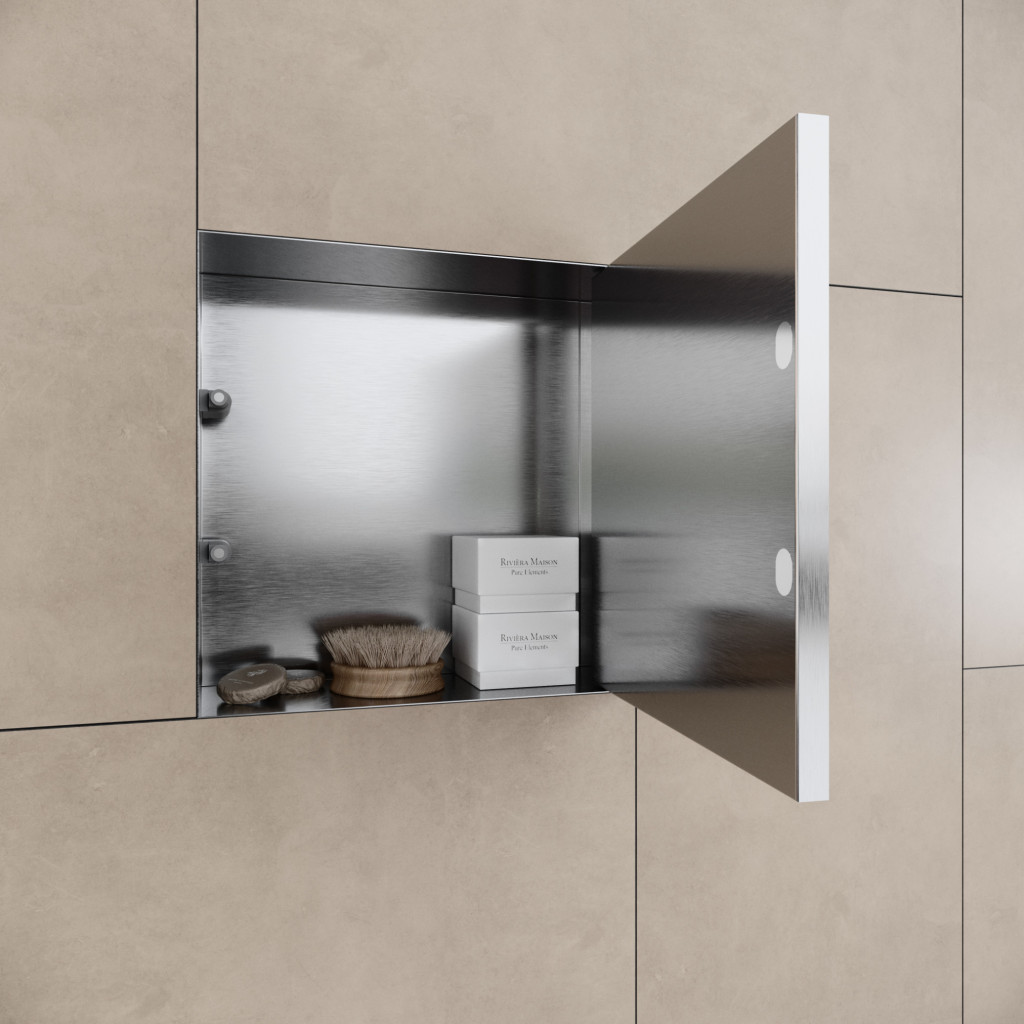
The aesthetic improvement provided by a niche does not depend on its appearance alone. It depends, above all, on how it relates to the rest of the cladding and the overall composition of the space. A well-placed, well-proportioned and flush niche reduces visual noise, avoids unnecessary protrusions and allows the wall to maintain a cleaner look.
This is especially noticeable in ceramic tiling. When the niche aligns with the placement of the tiles, the joints flow with the overall pattern and the result looks more orderly and coherent. This is the case with solutions such as the Euroniche HC/CERAMIC, designed to be integrated into the tiling and encourage a more discreet, flush finish. When it is not considered from the start, unnecessary cuts, forced joints and lines appear, breaking the continuity of the whole. The difference between an integrated solution and an improvised one usually starts there.
Furthermore, when a niche is well executed, it is evident in the precision of the joints, the overall alignment and the consistency with the cladding. These adjustments are what make the niche feel like a natural part of the project rather than an afterthought.
Talking about the finish is not just about what is seen on handover day. It is also about how the sense of order is maintained over time. A space may look very clean at first, but if it doesn’t handle daily use well, it visually deteriorates very quickly.
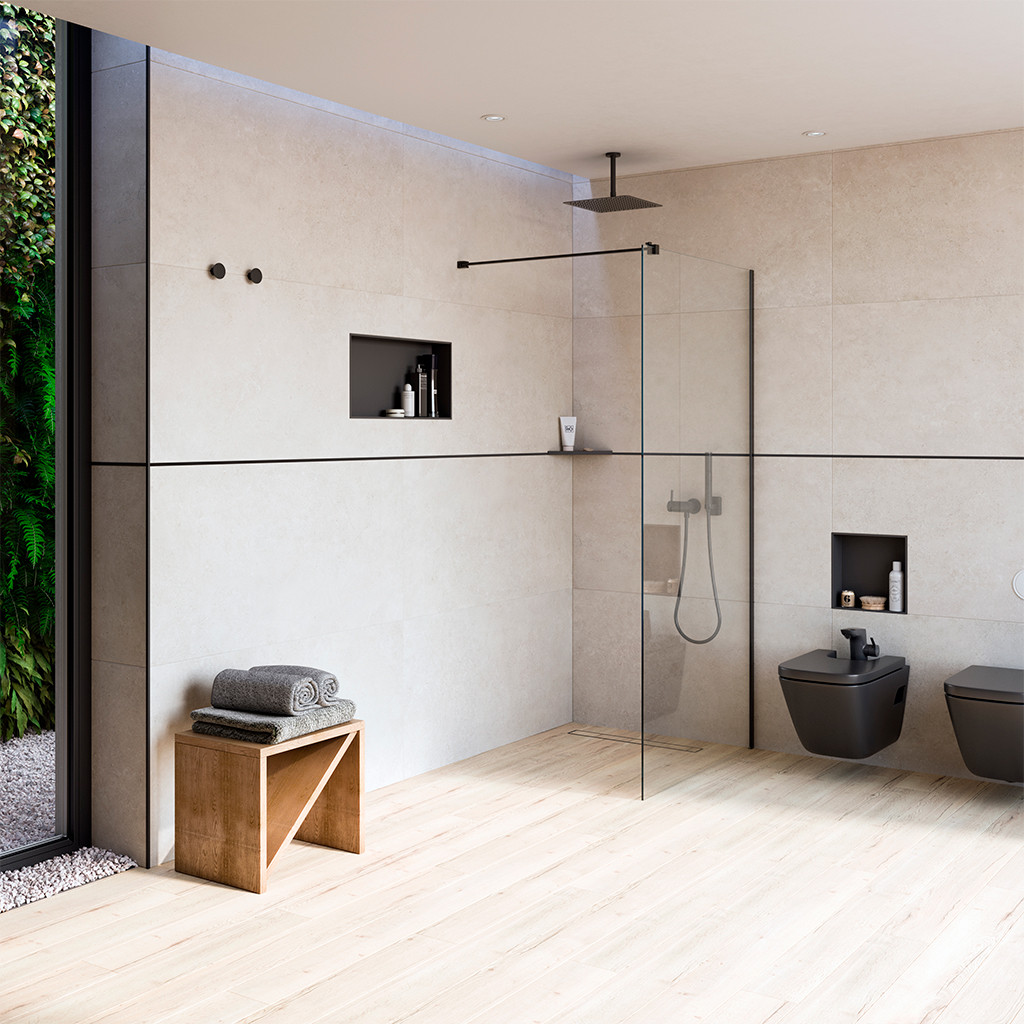
The niche adds value right there. Instead of resting products on edges, external shelves or auxiliary furniture, it concentrates use in one integrated point. This creates a much cleaner and more stable visual appearance, which is maintained even with daily use.
In a small bathroom, for example, removing an external shelf and moving that storage inside the wall can allow the worktop or shower area much more room to breathe. Solutions such as the Euroniche HCEST make it possible to create multiple storage tiers without adding elements that protrude from the surface.
In kitchens, a niche allows small jars, utensils or frequently used items to be stored without cluttering the work surface. In hallways, living rooms or bedrooms, it can serve as a light shelf, a decorative feature or a functional alcove without taking up usable space.
Another important consequence is that, by freeing up surface area, the space feels larger. In compact rooms, this sense of visual lightness significantly improves the overall feel of the finished project.
The bathroom is probably where the value of a niche is most appreciated. In the shower area, it allows everyday products to be kept close at hand without resorting to external accessories that often disrupt the aesthetics of the tiling, but its contribution is not limited to that area.
It can also address storage needs next to the washbasin, provide continuity on other bathroom walls or even function as a well-integrated decorative feature, something very common in modern bathrooms. Furthermore, when integrated into a well-executed solution, it helps to reinforce that sense of visual cleanliness, precision and coherence that defines spaces such as a floor-level shower.
For this reason, a niche should not be seen as a one-off solution just for bathrooms. In reality, it is a versatile design feature that can improve both the functionality and the visual quality of different rooms.
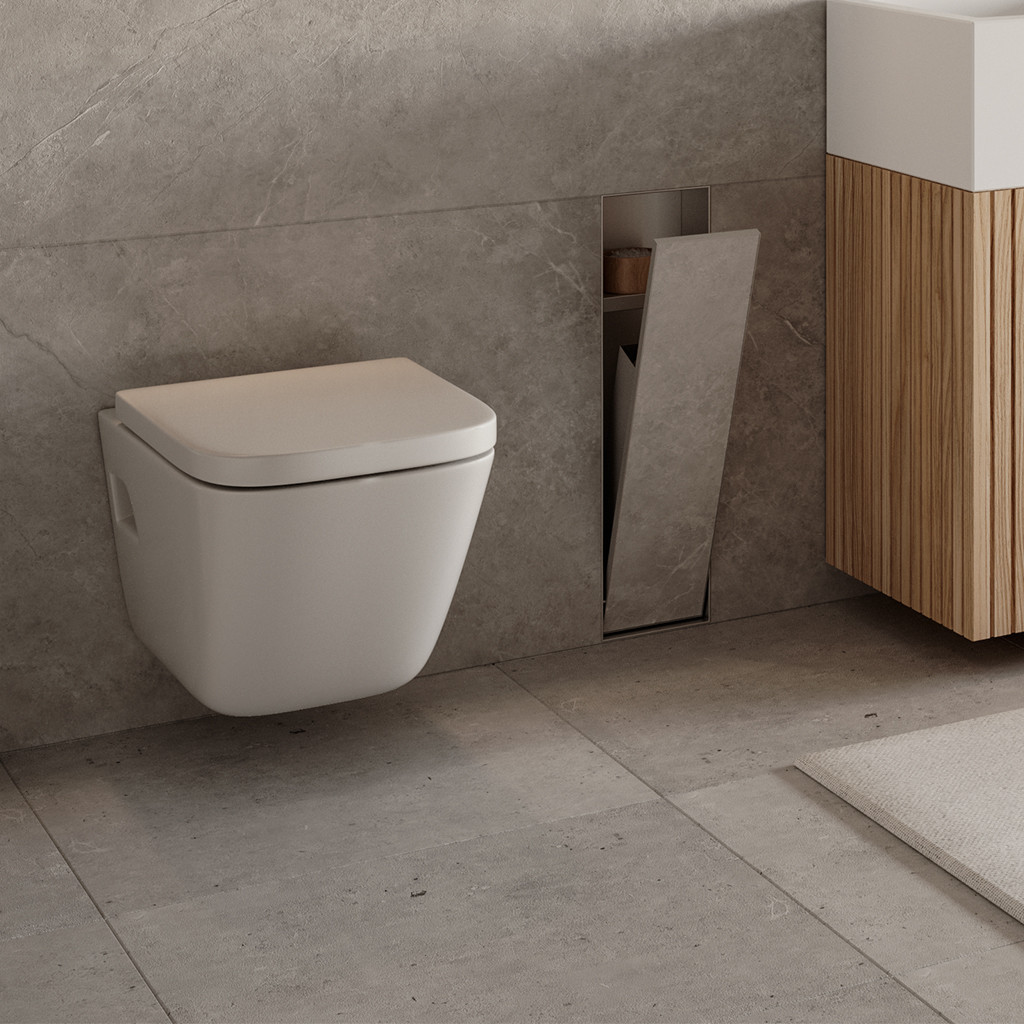
For a niche to fit naturally into the finish, simply cutting a hole in the wall is not enough. Five aspects make the difference:
When these five decisions are handled well, the niche stops looking like an addition and becomes a natural part of the whole.
When seeking a clean and precise finish, the technical execution also matters. Niches built entirely on-site can work, but they require a great deal of control to ensure that measurements, thicknesses, edges and finishes turn out really well. When this fails, it is very noticeable.
In contrast, a prefabricated solution offers clear advantages. It leaves less to chance, makes installation easier and helps to better control the final geometry, as seen in products like the Euroniche HB, designed for integration into ceramic tiling with a more controlled execution and a more uniform final result.
This usually translates into more uniform joints, a better fit and a more professional finish. For the installer, it means greater reliability on the job. For the end user, it means a more reliable, orderly and attractive solution.
If you need advice on choosing the right niche, contact us. We will help you find the solution that best integrates into your project and contributes to a cleaner, more functional and more refined finish.


