
There’s one thing almost nobody mentions when talking about tiled walls and ceramic cladding. You carefully choose the tiles, debate the size, colour, and grout width… and then, just when everything seems settled, the awkward question comes up:
What do we do with the corners?
So many projects get ruined right there. A poorly resolved edge, an exposed tile edge, or a tile cut by eye can visually spoil a job that was otherwise perfectly executed. And it’s not just about looks: corners are weak spots, vulnerable to knocks, wear, and breakage from day one.
That’s where tile trim and corner profiles come in. They’re a subtle but crucial element that protects, organises, and elevates the final finish of the project.
Corners bear concentrated stress, impacts, and constant use. In bathrooms, kitchens, hallways, or commercial spaces, they’re the first areas to deteriorate if they aren’t properly protected. Chipped edges, open joints, or sharp corners don’t just make the space look bad – they create ongoing maintenance issues, safety hazards, and reduced durability.
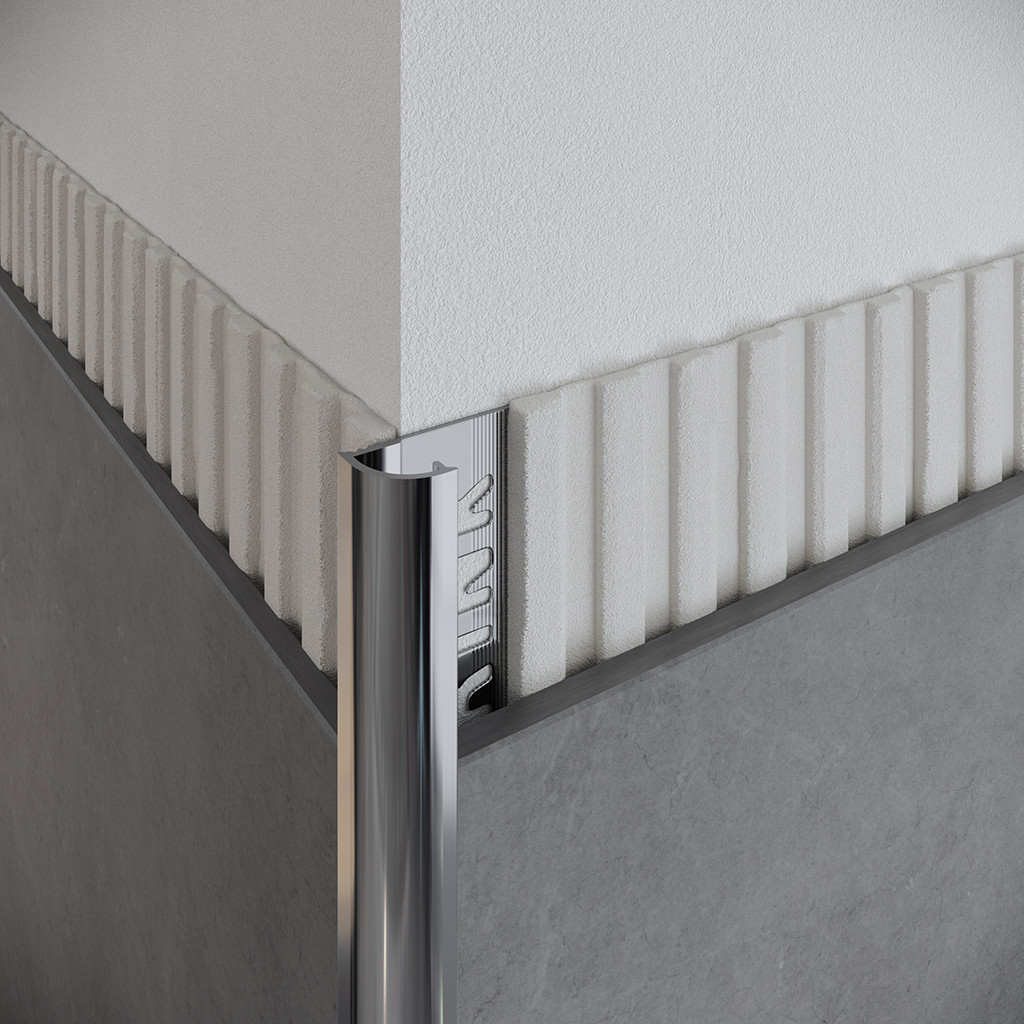
A well-chosen corner profile reinforces the edge, provides a clean transition between tiles, and creates a continuous line that conveys order and quality. Profiles like the Eurocorner 135A, designed for bevelled finishes, protect critical points without disrupting the overall tile design. When properly integrated, it’s barely noticeable. When it’s missing, it always stands out.
This type of profile acts as a structural piece fully integrated into the cladding. Other models, such as the Eurocorner 150A or the Eurocorner 183A, offer variations tailored to specific project needs.
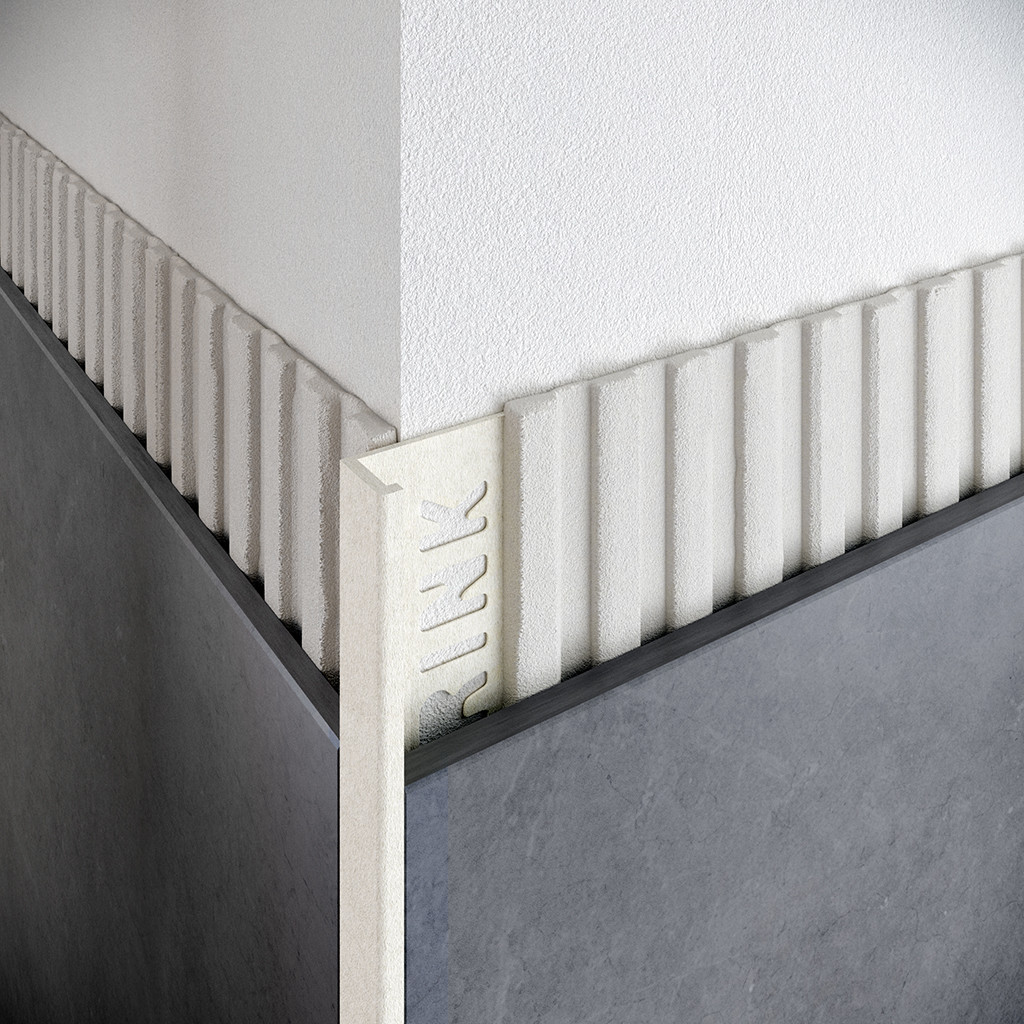
Beyond simply covering an angle, these profiles serve several key functions in ceramic cladding. They protect the tile edge from impacts, prevent sharp edges and potential injuries, and deliver a precise finish that replaces makeshift solutions like 45-degree miter cuts or silicone sealing. Profiles like the Eurocorner 145A ensure a uniform finish even with rectified tiles or large-format pieces. Other options, such as the Eurocorner 171A, round out the range by providing solutions for different tile thicknesses and cladding applications.
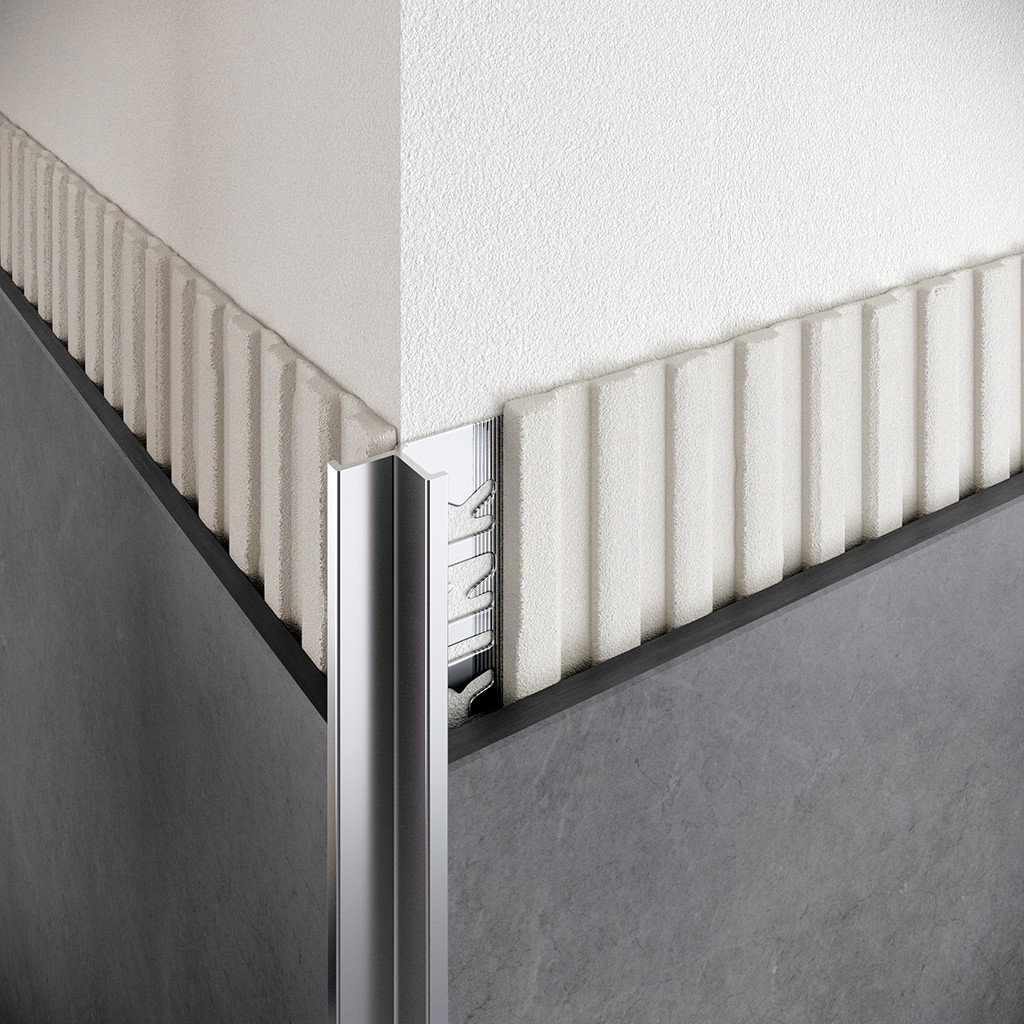
Today, in modern projects, corner profiles are no longer just a technical necessity – they’ve become a design feature too. A profile in matte black, brushed steel, or anodised aluminium can enhance the character of the space and complement fittings, frames, or architectural elements.
There are situations where leaving out a corner profile isn’t just an aesthetic choice – it’s a technical mistake. Interestingly, these issues tend to crop up in the same spots: high-traffic areas, visible junctions, and spaces that see heavy daily use.
Think of a narrow hallway, a bathroom entrance, or the edge of a partition next to a door. These are places where accidental bumps are inevitable. Without protection, tiles eventually chip, joints open up, and the cladding ages prematurely. What seemed like a minor detail turns into constant repairs… or an early renovation. In these spots, using robust profiles like the Eurocorner 183A prevents early tile breakage and reduces future maintenance.
In commercial spaces, hotels, or high-traffic homes, corners not only take more abuse – they’re also scrutinised more closely. A worn edge conveys neglect, even if the rest of the space is well maintained. By contrast, a well-integrated corner profile keeps lines straight, protects the material, and preserves the original look for years.
That’s why many professionals no longer ask whether to use corner profiles, but which one is best for each specific spot. Not all corners face the same demands, and getting it right from the start prevents problems that inevitably show up when it’s already too late.
Not all corner profiles are the same, nor do they serve the same purpose. The material affects both the aesthetics and the strength and lifespan of the profile.
Aluminium is one of the most versatile options. Lightweight, resistant, and available in a wide range of finishes, it fits perfectly in residential homes, commercial spaces, or offices. Profiles like the Eurocorner 150A provide an elegant and precise finish without visually overwhelming the corner, striking an excellent balance between durability and design.
Stainless steel, featured in models like the Eurocorner 135S, is the natural choice for demanding environments. It withstands moisture, cleaning products, and heavy use without losing its appearance. That’s why it’s common in bathrooms, kitchens, hotels, or healthcare facilities where hygiene and longevity are top priorities.
In more unique projects, decorative profiles with special finishes can turn the corner into an architectural feature rather than something to hide.
The key is planning ahead. A corner profile isn’t added at the end – it’s integrated from the very start of the tiling process. That’s why it’s essential to consider the actual tile thickness, the type of space (indoor, wet area, high-traffic), and the overall style of the project.
Models like the Eurocorner 150A, Eurocorner 171 or Eurocorner 188 are specifically designed to protect corners and edges without creating visual discontinuities, ensuring proper alignment and a clean finish right from the first tile.
When the profile is incorporated alongside the cladding from the beginning, the result is clean, aligned, and long-lasting. When it’s improvised, it shows. And it shows a lot.
Even the best profile is pointless if it’s installed poorly. A corner profile should be placed along with the ceramic tile, perfectly aligned and securely anchored with the right adhesive. It’s not about “covering up” a corner, but about building it properly.
Professionals know this: a well-resolved corner saves on complaints, prevents future breakage, and shows attention to detail. And that detail is what separates a correct job from a truly professional one.
One of the most common concerns about corner profiles is that they’ll “stick out too much.” For years, they were associated with purely functional, visible, and unrefined solutions. But that’s changed.
Today, trim profiles are designed to complement the design, not compete with it. A well-chosen profile can blend in visually or, if desired, enhance the character of the space. The key is coherence.
In minimalist settings, slim profiles in anodised aluminium or stainless steel – like the Eurocorner 135S or Eurocorner 183R models – create clean lines that organise the cladding without stealing the spotlight from the tiles. In more contemporary projects, finishes in black or metallic tones, such as those offered in the Eurocorner 171, act as a unifying thread connecting corners, niches, and junctions.
Even when the goal is for it to go unnoticed, the corner profile is still there, doing its job. It protects the edge, defines the boundary, and ensures that, over time, the corner looks just as good as the day it was installed. That’s the difference between a thoughtfully invisible solution and an absence that ends up drawing attention for all the wrong reasons.
It’s still common to see profiles that are too thin for the tile thickness, materials that aren’t tough enough for constant impacts, or improvised fixes that age poorly. People also underestimate the visual impact of mixing finishes without a clear plan, which breaks the space’s harmony.
These are small decisions that end up costing a lot, both aesthetically and functionally.
A bathroom, kitchen, or commercial space can have spectacular cladding. But if the corners are neglected, the whole thing loses its value. Tile trim and corner profiles aren’t a minor add-on – they’re a structural part of the finish.
Choosing high-quality, well-designed, and properly installed profiles means protecting your investment, improving the cladding’s durability, and delivering a final result that feels solid, meticulous, and professional. At Euroshrink, we offer a complete range of corner profiles designed to meet the needs of every project.
If you need advice, schedule a consultation with our team. We’ll show you how our corner profiles can solve issues you hadn’t even anticipated and take your project to the next level.
Because in the end, whether in ceramics or architecture, quality is recognised in the details. And corners always have something to say.


